Crowns, bridges and dentures
Rebuilding damaged or missing teeth, from a single crown to work that carries a whole arch.
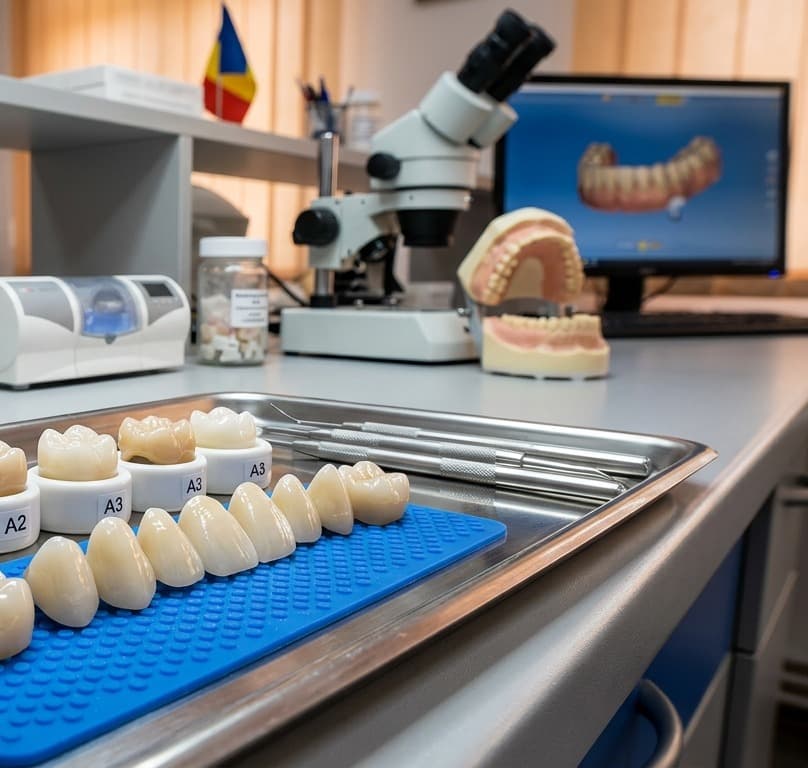
Crowns, bridges and dentures rebuild damaged teeth or replace missing ones, from a single crown to a restoration that carries a whole arch. The aim is for you to chew, speak and smile again without a second thought.
We choose the restoration based on how many teeth are affected, how healthy the remaining ones are and what you want. We explain the options and the differences between them on your X-ray, before anything else.
Suitable if
- A fractured or badly broken-down tooth.
- One or more missing teeth.
- Old restorations that need replacing.
- A root-treated tooth that needs protecting.
Not suitable if
- An active infection, until it is treated.
- Not enough supporting bone, without preparation first.
- Inflamed gums, until cleaned and treated.
Your alternatives
There are usually several solutions for the same tooth:
- A crown covers a damaged tooth and restores its shape and strength. When enough healthy tooth remains, a large filling or an inlay is sometimes enough.
- A dental bridge replaces a missing tooth by resting on the neighbouring teeth.
- A dental implant replaces a missing tooth without touching the neighbours.
- A removable denture replaces several teeth or a whole arch and comes out of the mouth; it can also be held by implants so it sits more securely.
The comparison between an implant and a bridge is in the guide Implant or dental bridge.
How it goes
Consultation and plan
Examination and estimate. We look at the teeth and gums, take the X-rays needed and explain the options. You get a written plan with the stages and an estimate.
Preparation
A professional clean and, where needed, root canal treatment and rebuilding of the teeth. A restoration only does well on healthy teeth and gums.
The treatment itself
Teeth that will take crowns are reshaped under local anaesthetic, then scanned or impressed. You wear a temporary restoration until the final one is ready. At the try-in we check shape, colour and bite, then cement it. Dentures go through a few adjustment visits.
Check-ups and maintenance
Regular check-ups and cleans. We check the edges of crowns, where the tooth underneath can decay, and adjust dentures as the gums and bone change.
How long it takes overall
- Consultation and plan
- one visit
- Preparatory treatment
- as needed, a few visits
- Crown or bridge
- 2–3 visits over a few weeks
- Removable denture
- 4–5 visits, plus adjustments
- Settling in with a new denture
- a few weeks
What the cost depends on
The cost depends on how many teeth are involved, the type of restoration and its material, and on the preparation: whether the supporting teeth first need root canal treatment or rebuilding.
You get an estimate in your plan for each option, so you can compare them. For larger work, payment can be spread in stages. Details in the guide to treatment cost.
Costs
How the cost of a treatment is set →What you will feel
Treatment is done under local anaesthetic, so the reshaping and the impression don't hurt. After cementing, the tooth may be sensitive to hot and cold for a few days.
A new denture feels big at first and you make more saliva; in the first weeks one or two pressure spots usually appear, which we adjust at the check-up.
If you are anxious about the reshaping or the impression, tell us at the start. We explain each step before we do it, work without rushing and stop whenever you need. A digital impression with the intraoral scanner avoids impression paste and the gagging some people feel with it.
Risks and limits
The tooth under a crown can decay at its edge if cleaning isn't thorough, and a reshaped tooth may sometimes need root canal treatment later. With a bridge, the supporting teeth carry extra load.
Removable dentures are less stable than fixed work, and the bone beneath them shrinks over time, so they need relining. Ceramic restorations can chip from a knock; most can be repaired.
After treatment
What follows cementing, with the temporary and the final crown, is in After a dental crown. Settling in with a new denture, step by step, is in The first weeks with a denture.
After this treatment
Common questions
- How long does treatment take?
- It depends on each patient's situation. A crown or bridge usually takes two or three visits, and a denture a few visits plus adjustments.
- Does it hurt?
- Treatment is done under local anaesthetic. There may be some temporary sensitivity after cementing.
- How often do I come back for check-ups?
- At 3, 6 or 12 months, depending on the restoration. Dentures also need adjusting over time.
- What material are crowns made of?
- We choose it together, based on where the tooth is, your bite and how you want it to look. The options and their differences are in your plan.
- Can I eat normally with a denture?
- After a few weeks of settling in, yes. At first, choose soft food cut small, and chew on both sides at once.
- What if my temporary crown comes off?
- Keep it and call us: we re-cement it. The prepared tooth shouldn't be left uncovered for days.