Braces and aligners
Aligning teeth with fixed braces or clear aligners, with the result simulated before anything starts.
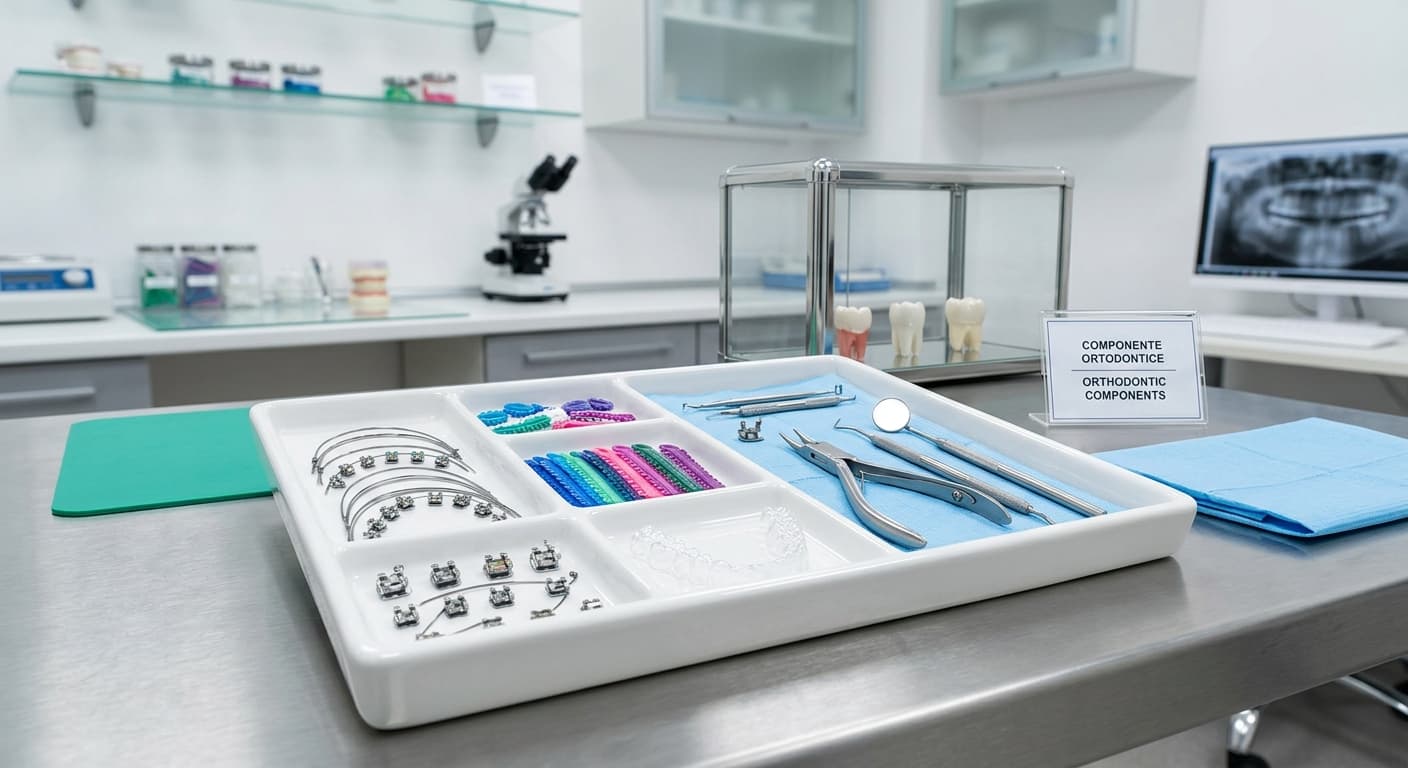
Braces and aligners straighten crowded, crooked or gapped teeth and correct some bite problems. Teeth can be moved at any age, as long as the bone and gums holding them are healthy.
We work with two options: fixed braces, with brackets, and clear aligners. Before you start you see a simulation of the result, so you know what we are working towards and how long it takes.
Suitable if
- Crowded, rotated or gapped teeth.
- Bite problems that load the teeth unevenly.
- Adults whose teeth moved after treatment in childhood.
- Making space for an implant or a restoration.
Not suitable if
- Inflamed gums or active gum disease, until treated.
- Untreated decay, until it is dealt with.
- Patients who can't keep up careful cleaning during treatment.
Your alternatives
There are usually several routes to the same result:
- Fixed braces work all the time without depending on you, and control complex movements well. They are visible and need more care when brushing.
- Clear aligners are barely visible and come out to eat. They only work if you wear them almost all day.
- Veneers or crowns can hide a small misalignment without moving the teeth, but that means working on healthy teeth. We rarely recommend it, and only after discussing the orthodontic option.
For adults, the differences between the options are explained in the guide Braces for adults.
How it goes
Consultation and plan
The consultation is based on a clinical examination and an orthodontic record: X-rays, photos and a 3D intraoral scan. From these you get a simulation of the result and a written plan, with the right option and the estimated length.
Preparation
Before fitting, we treat all decay and do a professional clean. A brace fitted on decayed teeth or inflamed gums does more harm than good.
The treatment itself
Fitting fixed braces takes one visit and doesn't hurt. With aligners, you get your set and learn how to put them in and take them out. Adjustment visits follow, usually every four to six weeks.
Check-ups and maintenance
Once the teeth have reached their final position, the retainer follows: a thin wire bonded behind the teeth, a tray worn at night, or both. The retainer keeps the result long term.
How long it takes overall
- Consultation, scan and simulation
- 1–2 visits
- Preparation (decay, cleaning)
- a few weeks, if needed
- Active treatment
- a few months to over a year
- Adjustment visits
- every 4–6 weeks
- Retainer
- long term
What the cost depends on
The cost depends on the type of appliance, how far the teeth need to move and how long treatment lasts. It also matters whether decay or gums need treating first, and what kind of retainer follows.
You get the estimate after the consultation, together with the simulation. For treatment that runs over several months, payment can be spread in stages. Details in the guide to treatment cost.
Costs
How the cost of a treatment is set →What you will feel
Fitting doesn't hurt. In the first days the teeth are tender when chewing, and the cheeks get used to the brace in about a week; orthodontic wax helps where it rubs.
After each adjustment or new aligner you feel some tightness again, which passes in two or three days. Soft food and, if needed, a painkiller are enough.
Risks and limits
Plaque left next to brackets leaves white marks on the enamel that don't go away, and can cause decay. That's why cleaning during treatment matters more than ever.
Aligners only work while you wear them: worn too little, treatment takes longer or doesn't reach the result. Without a retainer, teeth tend to drift back to where they were.
After treatment
The first days with a brace and how to clean your teeth are covered in The first days with fixed braces, and what follows each check-up in After an adjustment appointment.
After this treatment
Common questions
- How long does treatment take?
- It depends on each patient's situation: from a few months to over a year. You get the estimated length in your plan, after the simulation.
- Does it hurt?
- Fitting doesn't hurt. In the first weeks there may be some discomfort from the pressure on the teeth, which passes in a few days.
- How often do I come back for check-ups?
- Once a month or every four to six weeks, depending on the appliance and the stage.
- Am I too old for braces?
- Usually not. Teeth can move at any age, as long as the gums and bone are healthy. We check them at the consultation.
- Clear aligners or fixed braces?
- For many cases of crowding, both work. For some bite problems, fixed braces are safer. We tell you at the consultation which suits your case.
- Can I eat anything with braces?
- With fixed braces, avoid hard and sticky food and cut hard fruit into small pieces. Aligners come out to eat, so you can eat normally.